
Oct 9 / Sunshine Academy

Could It Be DLD? The Hidden Language Difficulty Affecting Children in Every Classroom

Learn signs of DLD at school, how it’s misread as behaviour, and classroom strategies to help. Read and support DLD Awareness Day.

Key Takeaways

  • Developmental Language Disorder (DLD) is common, often hidden, and affects how children understand and use language, not just how clearly they speak

  • DLD is often misread as behaviour issues, inattention, or low ability, which can delay the right support and lead to unhelpful responses

  • Small, consistent changes to adult language and classroom routines can improve access quickly, especially when they’re used every day rather than only during “extra support” time

When a child seems fine until the instructions start

Picture a typical school day: circle time, a quick story, then a shift into a busy block of multi-step instructions like “get your book, turn to page 12, underline the verbs, then swap with a partner.” A child may look completely settled during play, routines, and one-to-one chat, but start to stall, copy others, or go off-task as soon as verbal demands spike.

In a crowded classroom, these “hidden” needs are easy to miss because the child is not silent, not disruptive, and may even be chatty. The gap shows up when language has to do real work: following directions, learning new topic words, explaining an idea, or answering questions under time pressure.

A measured benchmark matters here: DLD is estimated at around 1 in 14 people, with childhood prevalence estimates around 7–8%. That means most schools will have several pupils who may be affected, including pupils who appear fine until the lesson depends on listening, processing, and expressing language.

By the end of this section, you will be able to spot plausible school-based signs that fit DLD and pick practical classroom strategies that reduce language load, without jumping to labels. The goal is to notice patterns across a week or two of lessons, then try low-risk adjustments that help many learners, not only those with DLD

What DLD is and what it is not

It helps to name the pattern clearly so support can match the need. DLD is a long term difficulty with understanding and/or using spoken language that cannot be explained by a known medical condition or a clear external cause. In plain terms, the child’s brain finds language harder work, even when hearing is typical and the child has had normal chances to learn language at home and at school.

DLD can show up in different ways: following multi step instructions, learning new words, putting words in the right order, using grammar markers like past tense, or explaining ideas in a clear sequence. It often becomes more obvious as classroom language gets denser, for example in Year 2 to Year 6 when tasks rely on listening, discussion, and written language to show understanding.

Also, DLD is often confused with other needs, so these quick contrasts can prevent the wrong label.

  • Speech sound difficulties are about how speech is pronounced (for example, many sound errors at age 5) while DLD is about language meaning and sentence structure, so a child may speak clearly but still struggle to understand or express ideas

  • Speech delay usually describes a child who is late to start talking but then catches up; DLD is persistent and may continue into adolescence and adulthood

  • Autism can include differences in social communication and interaction (for example, back and forth conversation or non verbal cues) while DLD is a language disorder and does not require those autism features to be present

  • ADHD affects attention and impulse control, so a child may miss instructions because they drift off; with DLD, the child may attend well but still not grasp the language in the instruction, especially if it is long or abstract

  • Learning disability is a broad term that can refer to cognitive or academic learning needs; DLD is specific to language, though it can occur alongside reading or spelling difficulties and can affect learning across subjects

That said, a safety note matters here: DLD is heterogeneous, meaning it does not look the same in every child. Two children can both have DLD but struggle in different places, such as one mainly with understanding questions and another mainly with building sentences.

Because of that, DLD cannot be identified from a checklist, a single classroom moment, or a blog post. If you suspect DLD, the safest next step is to collect specific examples over 2 to 4 weeks (for example, which instructions break down and which supports help) and discuss them with a qualified speech and language professional for a full assessment.

When language difficulties are misread as behaviour or attitude
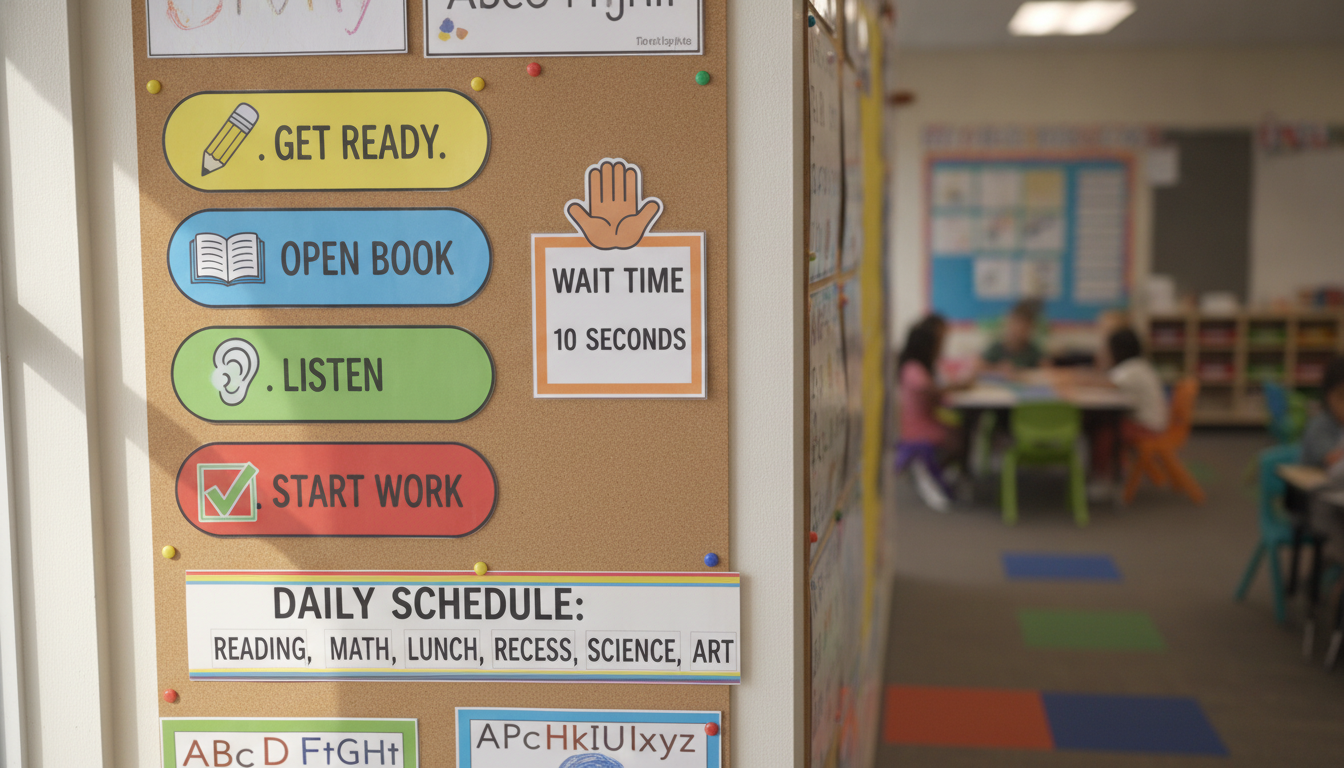
Next, it helps to separate what you see (behaviour) from what might be driving it (language load). When a child is working hard just to decode spoken language, there is less mental space left for self-control, speed, and accuracy. What can look like attitude is often a child trying to cope with too much language at once.

Here are common classroom labels that can hide a language-processing problem, plus what might be happening instead:

  • “Not listening” → they caught the first few words, then lost the rest once the instruction got longer

  • “Defiant” → they are covering confusion by saying “no” or doing something else that looks purposeful

  • “Lazy” → they are avoiding tasks that require heavy comprehension, especially reading and writing from verbal input

  • “Poor memory” → they may have weak verbal working memory, meaning they cannot hold and act on a long spoken message

Also, the misread often shows up in very specific school moments where language has to be fast, exact, and on demand.

  • Multi-step instructions: “Get your planner, write the date, copy the three questions, then answer number one,” becomes “do the first thing I remember”

  • Time pressure: quick transitions and timed tasks leave no time to ask for repeats, so the child guesses and looks careless

  • Emotional vocabulary: after a conflict, they may struggle to name feelings or explain what happened, which can look like refusing to take responsibility

  • Word-finding on demand: they know the idea but cannot find the word in front of the class, so they say “I don’t know” or use humour to change the subject

If you do one thing, watch for a pattern: behaviour changes when the language demand goes up. That contrast is often the clue that the support needs to start with access to instructions and vocabulary, not consequences.

Practical adjustments that improve access today

Next, focus on adjustments that lower the language load without lowering expectations. These are the kinds of changes you can apply in a lesson today, then keep if you see better follow-through, calmer behaviour, or more accurate work within 1 to 2 weeks.

If you do one thing first, simplify the language you use for directions. Keep sentences short, use common words, and say the key action up front (for example: “Circle the verbs” instead of “What I’d like you to do is identify…”).

Also, chunk instructions so students only hold one part in mind at a time. Give step 1, check it happened, then give step 2.

Try this quick routine (works well for group work and independent tasks, but fails when it is rushed or you add extra wording mid-task):

  • Give 1 instruction, then pause

  • Ask a student to repeat it back in their own words

  • Rephrase once, using different words, not louder voice

  • Give processing time (count 5 to 10 seconds before repeating)

  • Keep a visual version on the board: 3 to 5 steps with icons or simple sketches

That said, repetition only helps if it is consistent. Use the same phrases for the same classroom routines (for example: “Stop, look, listen” every time you transition), and pair them with the same visual cues. At home, the same idea works for morning and bedtime routines, with pictures for each step and the same wording each day.

Common mistake: asking “Do you understand?” and moving on after a nod. Fix: ask for a simple action or check, such as “Show me the first step” or “Tell me what you’re doing first,” then correct gently if the plan is off.

So, make collaboration practical with short prompts you can reuse in a 5-minute chat or a home-school message. Aim for shared observations and shared supports, not long explanations.

Use prompts like:

  • “When are instructions hardest: whole-class input, transitions, or independent work?”

  • “What wording and visuals are we using so it stays the same at school and home?”

  • “What helps most: extra wait time, fewer steps, or a visual checklist?”

  • “What are we seeing after 2 weeks: fewer reminders, more accurate work, less frustration?”

Here’s the catch: if a child is still missing key messages despite consistent supports, or their speech is hard to understand for their age, it’s time to discuss involving speech and language therapy. Bring 2 to 3 concrete examples (what was said, what the child did, what support was tried) so the next step is clear.

Closing remarks

Also, it helps to end with a simple reminder: “Together for DLD" means making language accessible, not making children try harder.” When the language load drops, you often see more independence in the first 10 minutes of a lesson, fewer repeat prompts, and calmer transitions.

Which moment in your day relies most on spoken language, and what one change could reduce the load tomorrow? For example, you might write the three-step instruction on the board, add a quick visual for the key verb, or ask a pupil to repeat back the first step before everyone starts.

Join the Sunshine Support community event

Next, if you want to hear directly from people living with DLD, join Sunshine Support’s community event “Derby Lights Up Purple for DLD” on Friday 16th October 2026.

You’ll hear from a speech and language therapist, a young DLD ambassador, and a parent perspective, so you can connect the day-to-day reality with the practical support that helps.

Lived experience is most helpful when you listen for patterns across stories and settings. Try to notice what shows up again and again, like difficulties following multi-step instructions, missing key words, or being misunderstood in group talk.

Here’s the catch: one story is not everyone’s experience of DLD. Treat each speaker’s account as one clear example, then use it to ask better questions in your own context, rather than assuming it will look the same for every child.

FAQ

Can DLD look like behaviour problems at school?

Yes. DLD can show up as refusal, “not listening,” or getting upset when tasks involve lots of talk. The fix is to check language load first: shorten instructions, add visuals, and ask the student to repeat the task in their own words.

DLD versus speech delay: what’s the difference?

A speech delay is mainly about pronunciation and speech sounds. DLD is trouble understanding and using language (words, grammar, and meaning), even when hearing is typical. A child can speak clearly and still struggle with classroom language.

What are signs of DLD at school?

Common signs include missing key steps in instructions, slow written work, trouble answering open questions, and difficulty retelling what happened. You might also see “I don’t know” often, copying peers, or doing better with demonstrations than verbal teaching.

What are practical DLD classroom strategies to try first?

Start with small changes that reduce language load:

  • Give 1–2 steps at a time

  • Use a visual checklist for routines

  • Pre-teach 5–8 key words before a topic

  • Check understanding with “tell me what you’ll do first”

  • Offer sentence starters for written tasks

References for further reading

Next, if you want reliable, practical materials you can share with colleagues or parents, start with these sources:

  • RADLD: DLD Awareness Day 2026

  • RCSLT clinical information on DLD

  • RADLD teacher resources

  • Derby Lights Up Purple for DLD

If you’re short on time, pick one item for background reading (RCSLT) and one item for classroom-ready materials (RADLD teacher resources).