Two Years Is Too Long: SEND Health Waiting Times at School
Key Takeaways
When a child is waiting for health support, school cannot always pause the impact. In March 2026, 81,986 children in England had waited longer than a year for community health services, leaving many families and schools managing needs without specialist input.
Long waits can make learning, wellbeing, attendance and family relationships harder
Schools can make practical changes now, such as clearer routines, reduced demands and regular check-ins
Specialist assessment and treatment still need to continue alongside school support
If you do one thing, record what is changing in the child’s school day. Specific notes about missed lessons, distress, fatigue, attendance and support that helps give schools and health teams a clearer picture of need.
When months of waiting begin to change a child’s school day
A child who once managed a busy classroom may start coming home exhausted, refusing school, or becoming distressed at seemingly small changes. Picture a pupil trying to follow spoken instructions while chairs scrape, classmates talk, and the timetable suddenly shifts for assembly, all while their family waits for community paediatrics.
By March 2026, 321,817 children were waiting for community health services. Waiting for an appointment does not mean a child’s needs pause: school days continue, demands build, and repeated overwhelm can affect attendance, learning, friendships, and confidence.
So, focus first on the parts of the day that cause the most strain. A teacher, parent, or pastoral lead can note patterns for 2 weeks: the time, setting, demand, what happened just before, and what helped the child recover. This creates a clearer picture than a general note that a child is “struggling.”
Practical adjustments may include:
Giving one instruction at a time, then checking understanding
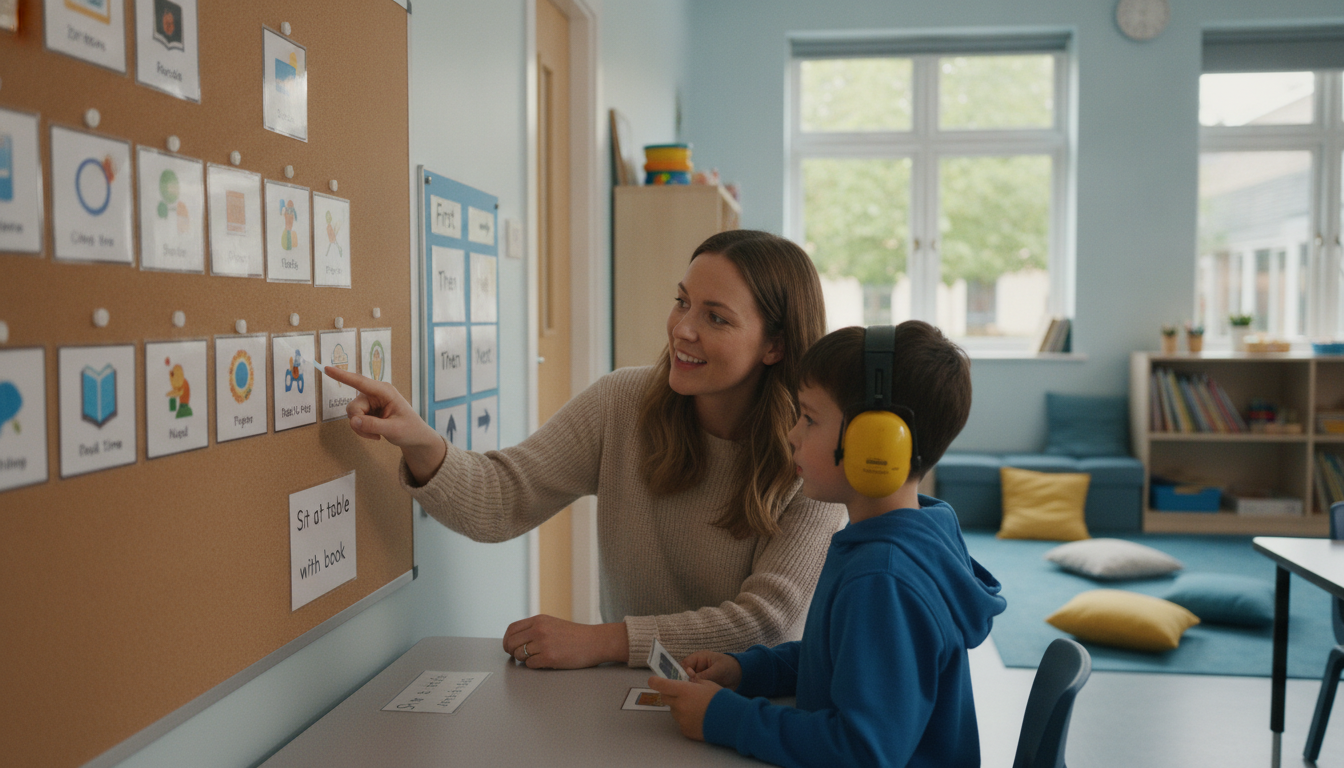
Sharing visual steps for lessons, routines, and changes to the day
Offering a quieter place for independent work or lunch when noise is too much
Giving a five-minute warning before transitions
Agreeing a calm exit route and an adult the child can go to when overwhelmed
These changes can reduce immediate pressure, but they do not diagnose a condition or replace assessment. By the end of this guide, you will be able to identify useful school adjustments, record changes clearly, and understand where school support must stop while specialist input is still needed.
What the latest figures reveal about SEND health waiting times
The latest figures show that long waits are affecting a large number of children. CQC data published on 23 October 2026 reported that 81,986 children in England had waited longer than one year for SEND-related health services.
That total was 129% higher than in April 2024. Nearly 4 in 10 children - 39% - had been waiting for more than two years, a period that can cover several school years and leave families trying to respond to needs without specialist input.
Why community paediatrics dominates the list
Here's why: 92% of children waiting longer than a year were waiting for community paediatric services. Community paediatrics supports children with a wide range of developmental, physical, behavioural and health needs, often where those needs affect everyday life at home or school.
These numbers should not be read as autism or ADHD assessment lists alone. A common mistake is to treat every long wait as a single diagnosis pathway; instead, schools should record the child’s specific day-to-day difficulties, such as missed lessons, toileting support, fatigue, communication barriers or escalating distress, while the family waits.
How delayed specialist input can turn into a school crisis
Also, a long wait can affect far more than an appointment date. When communication, sensory, or emotional needs are not understood, a child may take part less in lessons, avoid group work, lose confidence with friends, or begin missing school more often.
A pupil who covers their ears during assembly, leaves class repeatedly, or refuses a task may be showing distress rather than choosing to misbehave. A common mistake is treating the behaviour as the whole problem. Instead, staff and families can record what happens before, during, and after difficult moments, such as whether noise, unclear instructions, change, hunger, or a busy corridor is involved.
The pressure spreads beyond the classroom
So, pressure at school can quickly meet pressure at home. A parent may spend evenings calming a child after a demanding day, while teachers try to maintain attendance and learning without clear timescales or specialist advice. A missed morning, a difficult handover at the gate, and a shortened school day can become linked rather than separate issues.
If you do one thing, agree on a small shared record between home and school for two to four weeks. Include attendance, sleep changes, tasks avoided, friendships, sensory triggers, and what helped. This does not replace assessment, but it gives everyone a clearer picture and can help prevent a pattern of distress from being dismissed as poor behaviour.
What schools can change now while a child is waiting
Schools do not need to wait for a clinical report before making reasonable day-to-day adjustments. Start with a small number of needs-led changes that reduce pressure in the moments a pupil finds hardest, such as a visual prompt for the first three tasks, one clear instruction at a time, fewer competing noises, or warning before a transition.
Make the adjustments specific and assign each one to a named adult. For example, a form tutor might check the visual timetable at 8:45, a teaching assistant might offer a two-minute transition prompt before lunch, and the SENCO might review whether the plan is being followed.
Making support responsive rather than generic
Next, build support around what the child says helps, alongside what their family and staff are seeing. A pupil who freezes when asked a question may need 10 extra seconds to process; another may need access to a trusted adult, a quieter space for part of the day, or a gradual return after absence rather than an immediate full timetable.
Keep a short shared record that notes:
Triggers, such as crowded corridors, unexpected cover staff, or written tasks without a clear example
Barriers, including noise, fatigue, anxiety at drop-off, or difficulty starting work
Strategies that work, such as written choices, a calm check-in, movement breaks, or leaving class two minutes early
Any decline in wellbeing, participation, behaviour, or attendance
Set a dated review point, such as two weeks after the changes begin, and ask the child and family what has changed. Generic support often fails because it is too broad or inconsistent; a small plan works best when adults use it regularly and update it when the child’s needs change.
Why school support cannot replace clinical assessment or therapy
But reasonable adjustments at school cannot replace clinical assessment or treatment. A teacher can offer movement breaks, quieter instructions, extra processing time, or a safe place at lunchtime, but they cannot diagnose a communication need, assess medication, or provide mental-health treatment.
Schools should not be expected to carry clinical responsibilities or fill gaps left by health services. For example, a SENCO may record that a Year 5 pupil regularly shuts down during written tasks, while a speech and language therapist assesses whether language processing is part of the problem and sets specific therapy goals.
Support before diagnosis must not mean support instead of diagnosis
So a needs-led approach must run alongside, not replace, a clear route to specialist help. It becomes unsafe when “we are supporting them in school” is used to delay referrals, leave concerns undocumented, or remove accountability for follow-up.
Ask for two things in parallel: immediate school adjustments and a recorded plan for assessment, treatment, and escalation. Keep dates, examples, attendance changes, and the impact on learning or daily life, such as three missed mornings in a fortnight or repeated distress at handover.
Ask who has made the referral and when it was sent
Check what evidence or forms are still needed
Agree a review date, such as four to six weeks
Ask what should trigger faster action if needs worsen
Record which adjustments help and which do not
In practice, interim support works best when it is specific and reviewed regularly. A visual timetable may help a child manage transitions, while weekly check-ins can flag rising anxiety, but neither should become a reason to stop pursuing clinical input when the child needs it.
Why waiting is not neutral for a child
But waiting is not a pause button. Over months or years, a child’s needs, confidence and experience of school can change: a once-manageable morning may become a daily refusal, or a learner who enjoyed lessons may begin to withdraw after repeated difficulty.
Meaningful support starts with asking what would help this child now, not only what may happen after an appointment. Schools and families can agree practical adjustments, review them regularly, and record what is getting harder or easier while there is a clear, accountable route to specialist care.
Record what is changing while your child waits
Next, keep a short, dated record of what is changing at school and at home. Note the barriers your child faces, such as missed lessons, rising anxiety at drop-off, reduced attendance, difficulty joining group work, or leaving class more often. Record adjustments the school has tried, what helped, what did not help, and any referrals or requests for support already made.
If you do one thing, keep review and escalation dates where everyone can see them. A simple one-page log can help parents, the SENCO, class staff and health professionals spot when needs are worsening rather than treating each incident as separate.
What to include in a waiting-time record
In practice, aim for specific observations rather than broad statements such as “school is hard.” For example, write “attended three mornings this week but left before lunch twice” or “used a quiet space for 15 minutes after assembly on four days.” These details give the school a clearer picture of participation, wellbeing and support needs.
Include:
Dates and a brief description of each barrier
Adjustments tried, such as a reduced timetable, sensory break, visual plan or trusted adult check-in
What changed after each adjustment
Referrals made and any contact from health services
Changes in attendance, sleep, distress, friendships or lesson participation
The next review date and who will act if needs increase
A common mistake is waiting until a crisis meeting to gather evidence. Update the record weekly, or after a significant change, so the next conversation can focus on what needs to happen now.