Waiting for an Autism or ADHD Assessment: What Support Can Your Child Receive Now?

Oct 2 / Sunshine Academy

Key Takeaways

  • A long wait for assessment should not delay reasonable adjustments or SEN support in school

  • Educational need and clinical diagnosis are different, and schools can act on barriers without a diagnostic label

  • Clear evidence and a written plan help families secure support while assessment is pending

Your child is struggling now, but the system says wait

You are watching school get harder week by week, but you are told an assessment could take years. Your child is melting down after school, refusing homework, or masking all day and crashing at home, and the advice you hear is often “wait for the report.” That gap between what your child needs now and what the system can process feels unbearable.

A useful benchmark to hold onto is this: recent reports referenced 4 Integrated Care Boards with minimum waits of 2+ years, and 15 using restrictions. Even if your local pathway is faster, the message is the same, you cannot plan your child’s day-to-day support around an unknown date. By the end of this post, you will know what support can start now, what to ask school for this week, and what evidence to keep building while you wait.

Why the assessment wait feels like the whole story

It can sound like one official decision has been made when you hear, “The wait is two years,” or “Nothing happens until there’s a diagnosis.” In practice, what families are hearing is often a mix of local service capacity, referral pathways, and school processes, not one single nationwide NHS rule that blocks support everywhere.

What gets reported locally can be true for that area, clinic, or service line, but it does not automatically mean a single policy applies across the country. One borough might use a stricter triage step, another might have different criteria for which team sees your child first, and another might have a shorter list for ADHD than autism, or the other way around.


Next, the hard part is that waiting has real costs: stress at home, missed learning, rising anxiety, and a child starting to see themselves as “the problem.” If you do one thing, keep separating the assessment from the support: an assessment is about confirming and describing needs, while support is about reducing barriers in class and at home.


Here’s the catch: many families pause everything because they think school cannot act until a label arrives. A practical fix is to ask for changes based on observed needs right now, such as:

  • Reduced written output for 2 to 4 weeks while handwriting fatigue is checked

  • Clear, short instructions plus a visual checklist for independent tasks

  • A calm break plan that is agreed in advance, not only after a meltdown

  • Seating, noise reduction, or permission to use ear defenders during loud parts of the day

  • A simple home school communication note focused on one target at a time

If you’re short on time, pick one setting that is hardest, such as mornings, maths, or the last hour of the day, and trial two adjustments for 10 school days. This keeps the focus on what can change this week, even while the assessment timeline stays out of your control.


What schools can do without a diagnosis

Next, it helps to separate the medical process from what school can do day to day. A clinical assessment is a health process that can confirm a diagnosis, but educational support is based on need you can see in school right now, like sensory overload in assemblies or missing instructions in a busy classroom.

Diagnosis can help everyone understand a pattern, but it is not permission for support to begin. If your child is struggling at 10:30 every Monday in maths, the right response is to change what happens at 10:30 on Mondays, not to wait months for a letter.

Also, these terms often get mixed up, so here is a quick, practical way to tell them apart:

  • Clinical assessment: a medical evaluation that may lead to an Autism or ADHD diagnosis

  • Educational needs: the learning and access needs school can identify through observation and work samples

  • SEN support: help a school can put in place from its own resources, often recorded as a plan with targets and reviews

  • Reasonable adjustments: changes that remove barriers, like chunking instructions, movement breaks, or a quiet space at lunch

  • EHC needs assessment (request) and EHCP (EHC plan): a process and, if approved, a legal plan for a higher level of support when needs are more complex or long term

Here’s why this matters: schools can start with reasonable adjustments and SEN support quickly, then review after 4 to 6 weeks using simple measures like attendance, incidents, work completion, or time needed to start tasks. A common mistake is waiting for a diagnosis before trying anything, and the fix is to agree 2 to 3 specific changes, set a review date, and keep notes of what improves and what does not.

A practical plan for support while you wait

You do not need to wait for a label to start helping your child day to day. A practical plan is simply agreeing a few clear supports, trying them for a short period (often 2 to 4 weeks), then checking what changed.

Here’s the catch: “universal provision” (the basic help available to all pupils) should not be used as a reason to delay targeted, individual support. If your child is struggling most days, it’s reasonable to ask for a written plan that names what staff will do, when they will do it, and how you will know if it’s working.

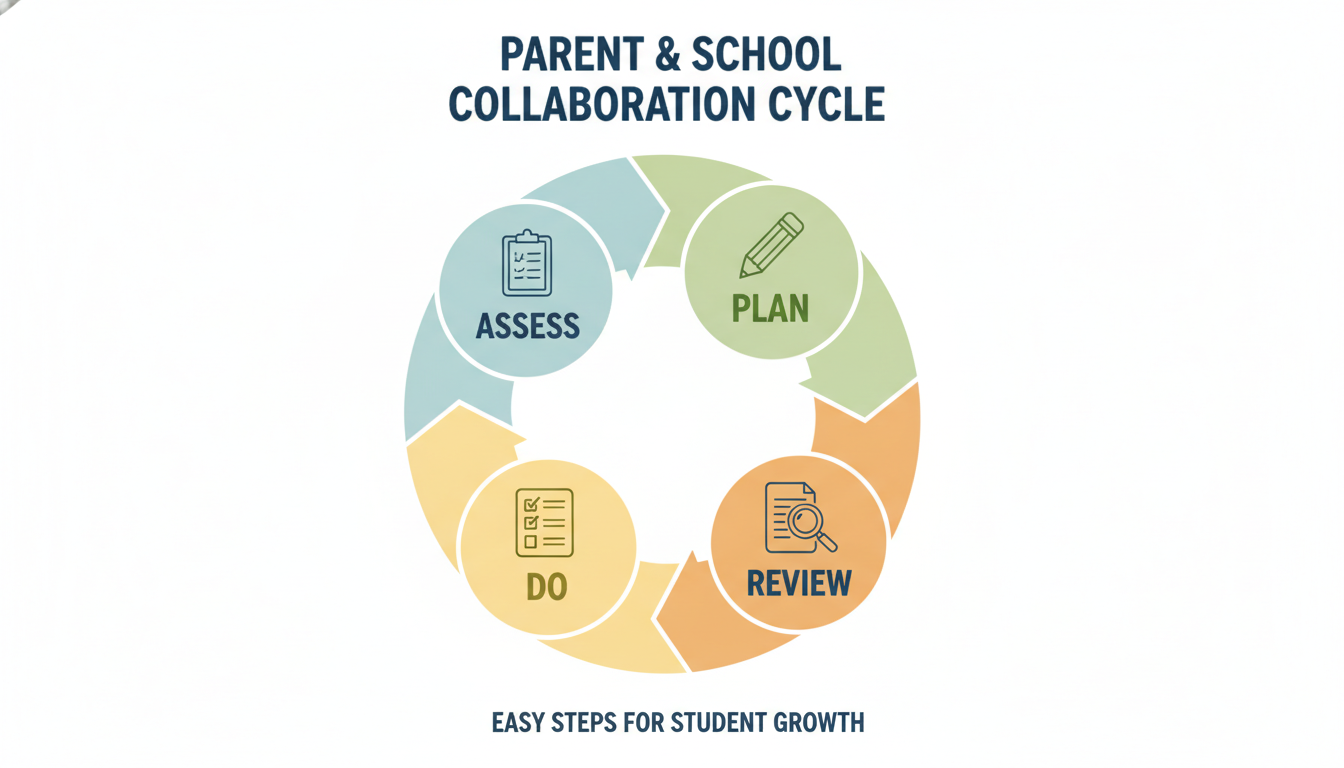
Use the graduated approach: assess, plan, do, review

Next, keep the plan simple, specific, and measurable. If you do one thing, ask school to run the supports through an assess-plan-do-review cycle so changes are based on what your child actually finds hard.

  • Assess: Write down the top 2 problem moments (for example, lining up after lunch and starting independent writing). Note what happens before, during, and after, plus what helps at home

  • Plan: Pick 3 to 5 supports linked to those moments, decide who owns each one, and agree a start date

  • Do: Try it consistently for a set period (often 10 to 20 school days). Keep it the same across lessons where possible

  • Review: Compare what changed (frequency, duration, or intensity). Keep what helps, drop what does not, and adjust one thing at a time

Common mistake: changing five things at once and then not knowing what helped. Fix: change one support per problem moment between reviews.

A menu of supports to discuss with school

That said, supports work best when they match the situation. Visual supports may help in fast-paced classrooms, but they can fail if they are too wordy or not consistently used by all staff.

You can suggest options like these, then agree the smallest set that covers the biggest problems:

  • Clear steps: break tasks into 3 to 5 steps, given one at a time, with an example of the finished work

  • Visual supports: first-then boards, visual timetables, timer, desk checklist, “help” card to reduce calling out

  • Regulation breaks: planned 3 to 5 minute breaks every 30 to 45 minutes, before your child reaches overload

  • Sensory adjustments: seating away from noise, ear defenders for drills, access to fiddle item, reduced fluorescent glare where possible

  • Quiet space: a named space your child can go to with a clear rule (who, when, how long, how to return)

  • Homework and recording changes: shorter tasks, fewer questions, typed work, scribe, speech-to-text, permission to photograph the board, printed notes

  • Trusted-adult check-ins: 2 minutes at the start and end of day to preview stress points and reset after difficult moments

  • Transition support: early movement between classes, a buddy, or a staff handover so your child is not relying on memory under stress

Constraint: if staff time is tight, start with trusted-adult check-ins plus one classroom change for the hardest lesson. This often improves safety and attendance while you fine-tune the rest.

When school attendance starts to unravel

Sometimes attendance slips before anyone names the real problem. A child who could manage full days may start arriving late, asking to go home at lunchtime, or missing one day a week, until intermittent absence becomes non-attendance.

This is often what unmet needs look like in real life: anxiety that spikes at the school gate, masking (hiding how hard things feel) that leads to distress after school, and burnout that makes getting dressed feel impossible.


Next, treat attendance difficulty as information, not misbehaviour. The pattern usually points to a barrier the child cannot solve alone, even when they want to attend.


Common barriers to check first:

  • Morning transitions that move too fast (waking, clothing, breakfast, leaving)

  • Sensory overload at arrival, corridors, assemblies, and/or lunchrooms

  • Social uncertainty (unstructured times, group work, being singled out)

  • Work demands that outpace skills (writing load, speed, handwriting, homework)

  • Safety gaps (no trusted adult, unclear break plan, inconsistent responses)


That said, the strongest support can start before an assessment. If you do one thing, make a short home-to-school “bridge plan” that reduces demand at the hardest points of the day and makes the child’s next step feel doable.


A simple bridge plan can include:

  • A 10 to 15 minute buffer in the morning and a later start for a set period

  • A predictable arrival routine (same door, same adult, same first task for 2 weeks)

  • A planned break card the child can use without asking out loud

  • A reduced timetable or part-days that build back up, rather than pushing for full days immediately

  • A clear threshold for when to switch to the backup plan (for example, late arrival instead of staying at home)

Works best when the adults keep it consistent for at least 10 school days, and it can fail when changes are made daily based on how things look in the moment.

Closing remarks

“A child’s needs exist before a report confirms their name.”

If you have been waiting weeks or months for an autism or ADHD assessment, it can feel like nothing can change until paperwork arrives. But support can start with what school can already see today: missed lessons, rising anxiety at the school gate, frequent movement breaks, or work that falls apart after 10 minutes.


So here’s a practical closing question to take into your next conversation with school: what is one barrier you want school to remove this week, and what evidence will best show its impact?


For example:

  • Barrier: transitions between classes. Evidence: fewer late marks and fewer distress calls home over 5 school days

  • Barrier: noisy classrooms. Evidence: longer time on task during independent work (for example, 15 minutes instead of 5)

  • Barrier: unclear instructions. Evidence: fewer repeated prompts and more completed tasks in one subject

If you do one thing, make the barrier and the evidence small enough to track daily, not “by the end of term”

Explore more support from Sunshine Academy

So, if you want to keep moving while you wait, these two reads can help you take the next practical step.

First, if school is becoming harder to face day by day, read Why Your Child Is Struggling to Attend School. It breaks down common reasons behind attendance problems (like anxiety, sensory overload, or repeated negative feedback) and gives you a clear way to talk with school about what to change first.


Next, if you are thinking about formal support but your child is not “behind” academically, read Your Child Doesn’t Need to Be Behind to Get an EHCP. 

(A quick note on language: in England, the plan is an EHCP (Education, Health and Care Plan). In Wales, support is usually described through ALN (Additional Learning Needs) and plans called IDPs (Individual Development Plans), which aim to meet needs across school settings).

EHCPS