In the beginning, it’s often a feeling.
Something doesn’t quite add up.
Something feels harder than it should do.
And then, over time, that feeling becomes something clearer.
Not necessarily easier to understand, but harder to ignore.
You try the things that are meant to help.
Clear instructions.
Consistent routines.
Encouragement.
Sometimes they work.
Sometimes they don’t.
And when they don’t, it can feel confusing.
You might find yourself wondering:
- Why does this work for other children but not mine?
- Why does it feel like we’re always one step behind?
- Why does everything take so much more effort?
It’s not that nothing is working.
It’s that the approach might not match what your child actually needs.

What can look like behaviour often carries a message.
A child who avoids a task may not be refusing.
A child who becomes overwhelmed may not be overreacting.
A child who shuts down may not be disengaged.
Sometimes, these moments are the clearest way a child can communicate:
“This doesn’t feel safe.”“This is too much.”
“I don’t know how to do this.”
But when those messages aren’t understood, the response often focuses on the behaviour itself.
And that’s where things can start to feel stuck.
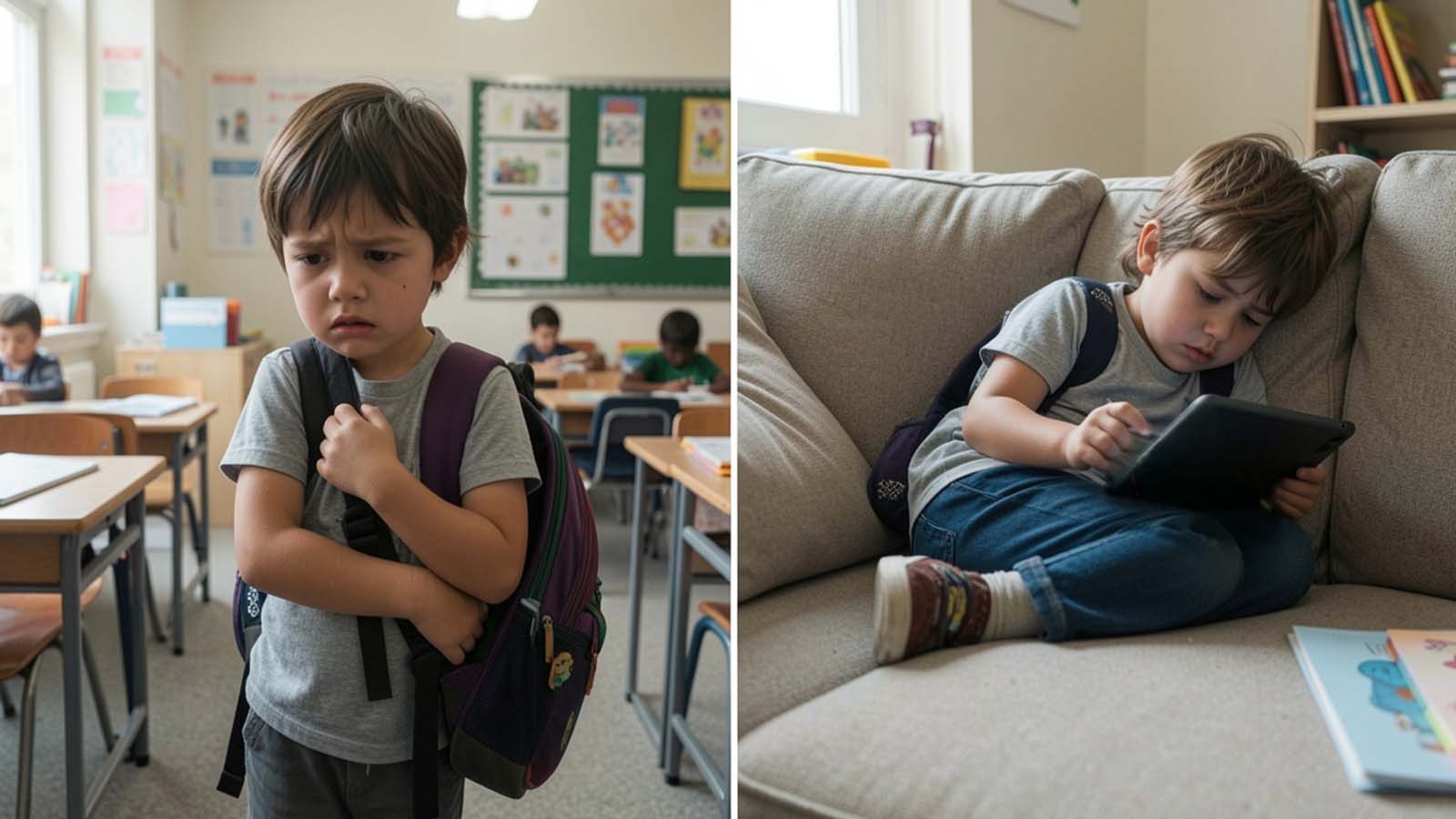
For many families, one of the most difficult parts is the difference between what is seen at school and what is experienced at home.
You might hear:
“They’re doing well.”“They seem fine here.”
And yet at home, it’s a different story.
Exhaustion.
Emotional outbursts.
Complete shutdown.
This gap can be incredibly hard to explain.
Because both things can be true at the same time.
A child may be coping in one environment — and struggling deeply in another.
Over time, these moments don’t stay separate.
They begin to connect.
What was once occasional becomes more frequent.
What was once manageable becomes harder.
You might start to notice:
- increasing anxiety
- stronger reactions to small changes
- difficulty with everyday demands
- more time needed to recover
And it can begin to feel like everything is building at once.
One of the hardest parts is not having a clear answer.
You can see that your child is struggling.
You can feel that something isn’t right.
But understanding why can feel out of reach.
And without that understanding, every decision feels heavier.
Do you push forward?
Do you step back?
Do you change things?
There isn’t always a clear path.
In the middle of all this, parents are often holding a lot.
Trying to support their child.
Trying to work with school.
Trying to make sense of advice coming from different directions.
And often, trying to do it without a clear framework to guide them.
It can feel like you’re constantly adjusting, but never quite finding the thing that fits.

It can be easy to feel like something isn’t being done “right.”
But more often than not, what you’re seeing isn’t the result of a lack of effort.
It’s the result of a mismatch.
A mismatch between:
- what is being asked
- and what your child can manage in that moment
A mismatch between:
- the environment
- and their needs
A mismatch between:
- the approach
- how they experience the world
And until that mismatch is understood, things can continue to feel difficult.
This stage can feel uncomfortable.
Because it sits between:
Between:
- recognising something
- and understanding what to do about it
But it’s also an important stage.
Because this is where the questions become clearer.
And where the patterns begin to make more sense.
If stage one was about recognising that something feels familiar…
Then this is about understanding why it feels hard.
And that’s where things begin to shift.
Because once we understand what’s driving these experiences, we can begin to explore what might actually help.